TAS · Launceston
Le Petit Chou
4.7 · 190 aggregated reviews
The story
The early morning mist still clings to the Tamar River, curling around the historic architecture of Launceston like a breath of cold air. But inside a small, unassuming storefront, the atmosphere is a sharp, buttery contrast. Here, the air is thick with the scent of caramelized sugar and toasted nuts, a golden haze that seems to defy the damp Tasmanian dawn. The low hum of a convection oven provides a steady rhythm, punctuated by the sharp clack-clack of a metal tray hitting the prep table. Outside, a small queue has already begun to form, huddled in wool coats, their eyes fixed on the illuminated display case that promises a fleeting, delicious departure from the ordinary.
A Continental Dream in the Heart of the North
Le Petit Chou did not appear in Launceston by accident; it arrived as a deliberate act of culinary transposition. Founded by a family with deep-rooted training in the prestigious boulangeries of France, the bakery was born from a desire to bring the precision of the patisserie tradition to the rustic, rugged beauty of Tasmania. For the founders, the decision to settle in Launceston was motivated by a shared appreciation for the region’s local produce—the pristine dairy and high-quality flour that form the essential scaffolding of any great French bake.
What began as a modest endeavor to provide the community with a proper morning croissant quickly blossomed into something far more significant. Word of mouth spread through the quiet streets of the city, turning this small corner shop into a destination. Today, with a reputation bolstered by nearly two hundred glowing reviews and a near-perfect rating, the bakery stands as a testament to the idea that true quality is its own form of marketing.
The Architecture of Choux
To walk into Le Petit Chou is to understand that pastry is, above all else, an exercise in engineering. The shop’s signature, the choux pastry, is a masterclass in the delicate balance of steam and fat. It is a light, hollow vessel, yet it possesses a structural integrity that seems almost impossible.
"The craft is not just in the recipe, but in the patience," one might observe while watching the bakers work. They move with an economy of motion honed by years of repetition—the precise piping of dough onto baking sheets, the watchful eye on the humidity levels, the gentle temper of the ganache. It is a slow, methodical alchemy.
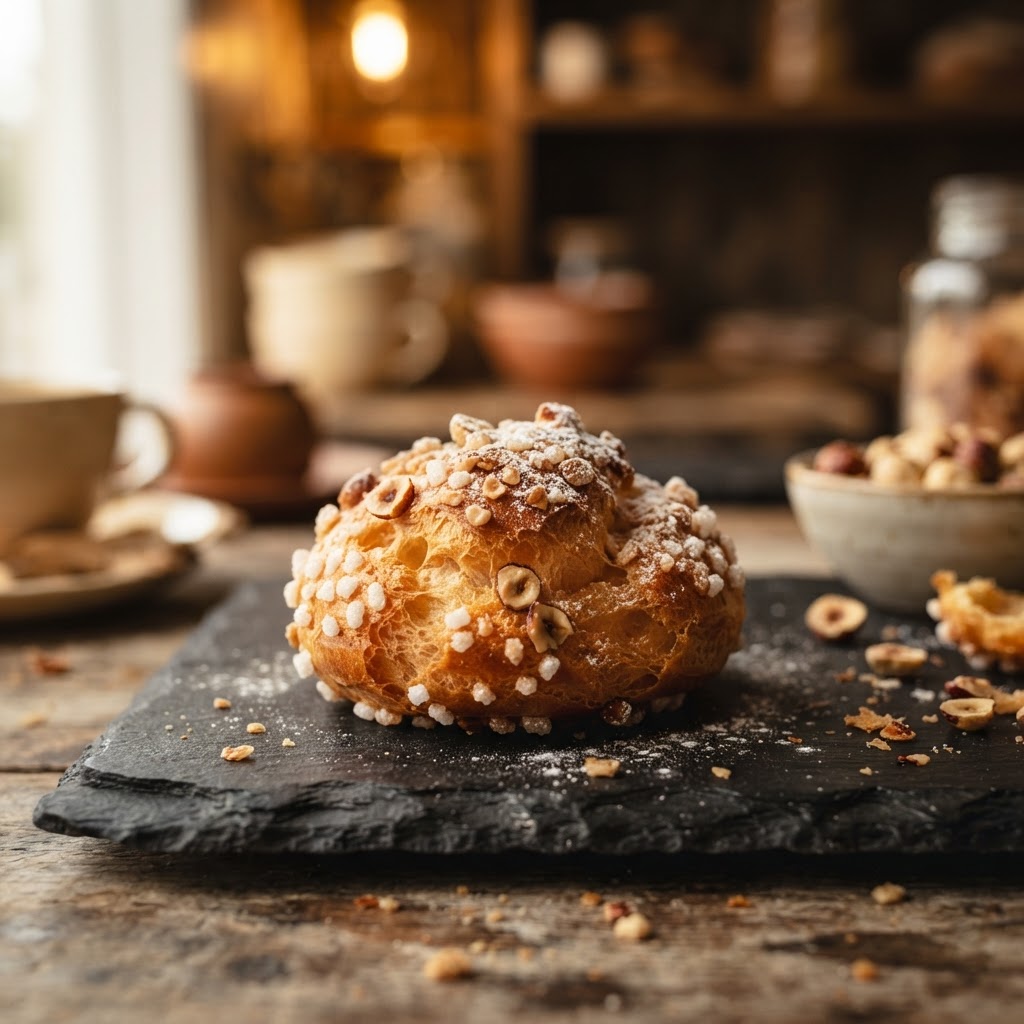
The Hazelnut Chouquette, a centerpiece of their repertoire, serves as a masterclass in texture: the initial resistance of the pearl sugar, the golden crack of the pastry, and the silken, nutty embrace of the hazelnut cream within. Then there is the Mille-feuille, a precarious tower of inverted puff pastry, layered with a crème pâtissière so light it threatens to vanish upon contact with the tongue. The Paris-Brest, shaped like a bicycle wheel in homage to the historic race, is a rich, decadent ring of hazelnut praline cream that anchors the bakery’s commitment to classic French techniques.
"To eat a well-made pastry is to participate in a conversation that has lasted for centuries; it is a moment of refined, singular joy in the middle of a busy day."
A Sense of Place
While the techniques are decidedly Parisian, the spirit of the bakery is unmistakably Tasmanian. The shop acts as a vital social hub, a place where the frenetic pace of modern life slows to the speed of a single macchiato. There is a quiet intimacy to the space; regulars nod to the staff, and the baristas know the orders before the customers have even reached the counter.
It is this juxtaposition—the high-minded refinement of the desserts versus the relaxed, salt-of-the-earth nature of the local community—that makes the bakery feel so vital. Whether it is a couple stopping in for a weekend indulgence or a professional grabbing a box of sweets on the way to a meeting, the bakery provides a shared experience of elegance. It is not merely a place to purchase food; it is a place to recalibrate one’s perspective.
The Ritual of the Patisserie
Visiting Le Petit Chou today is a sensory ritual. It begins with the chime of the door and the immediate shift in temperature, moving from the brisk Tasmanian air into the warmth of the shop. Behind the glass, the display is a curated gallery of color and texture: the deep, dark sheen of chocolate glazes, the vibrant dusting of berry powders, and the architectural precision of the sugar-work.
As the sun climbs higher over Launceston, the trays begin to empty, the day’s work being carried out in white paper boxes tied with simple, elegant twine. There is a sense of accomplishment in the air as the staff cleans the surfaces, preparing for the inevitable lull of the afternoon. For the patrons, however, the experience lingers long after the last crumb has been brushed away. Le Petit Chou remains a small, sweet anchor in the city, proving that even in the most remote corners of the world, one can always find the heart of Paris, provided one knows where to look.
What the reviews say
Scores aggregated from 190 public reviews.