The Winter Ferment: Nurturing Your Sourdough Through the Australian Chill
As temperatures drop across the continent, our sourdough starters demand a change in pace. Learn how to adapt your feeding rituals for the cooler months to keep your culture thriving.
The kitchen is quiet, save for the rhythmic, metallic scrape of a bench scraper against a wooden board. Beneath the window, a dusting of flour hangs in the air, catching the pale, filtered light of a mid-July morning. There is a distinct, sharp aroma—a heady, acidic tang that speaks of ancient alchemy—mingling with the faint scent of rain-dampened earth drifting in from the garden. It is the smell of survival, the quiet promise of a crusty boule born from patience and the Australian winter.
Adapting Your Rhythms
In the height of a Queensland summer or a temperate Sydney January, a sourdough starter behaves with predictable, explosive energy. Come winter, however, the metabolic rate of your wild yeast slows to a crawl. The golden rule is simple: stop watching the clock and start watching the culture. When the ambient temperature in your pantry drops below 18°C, the yeast simply requires more time and, occasionally, a warmer sanctuary. If your starter is sluggish, consider migrating it to the top of the fridge or inside a cool oven with the light left on—just ensure it stays below 28°C to avoid erratic activity.
The Flour Matters
When the mercury hits the single digits, your choice of fuel becomes critical. While high-protein strong white flour is the standard, Australian winter calls for a nutrient-dense boost. Incorporating 20% organic stone-ground rye or wholemeal spelt into your regular feeding schedule introduces a wider array of minerals and enzymes that wild yeast craves during cold snaps. These darker flours act as a catalyst, providing the 'kick-start' your starter needs when the air is biting. If you are sourcing locally, look for mills in the high-country regions like the Southern Highlands or the Adelaide Hills, as these flours often contain the robust proteins necessary for strong fermentation in cooler climates.
Reading the Culture
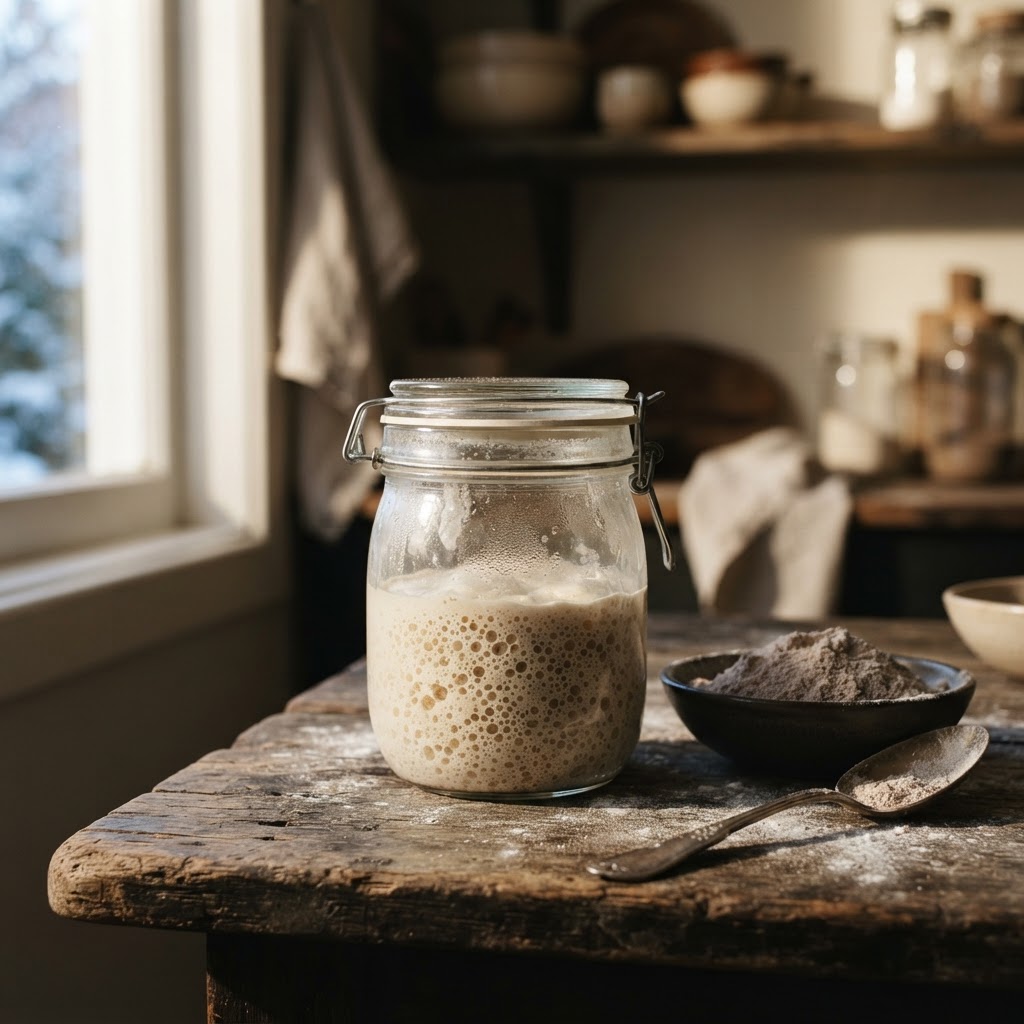
Learning to read your starter is an art form. In winter, look for the 'peak' by observing the dome of the culture. It may take twelve hours to double in volume rather than four, but look for the tell-tale bubbles clinging to the sides of the glass and that specific, fruity, yoghurt-like aroma. If it smells overly acidic—like nail polish remover or acetone—it is a sign of yeast fatigue; increase your feeding ratio to 1:2:2 or even 1:3:3 to refresh the acidity levels.
The Takeaway
Don't fear the slow-down. Winter fermentation creates a more complex, nuanced flavour profile in your bread. Be patient, use a touch of rye, and remember that your sourdough is a living companion—adjust your schedule to match its pace, not your calendar.