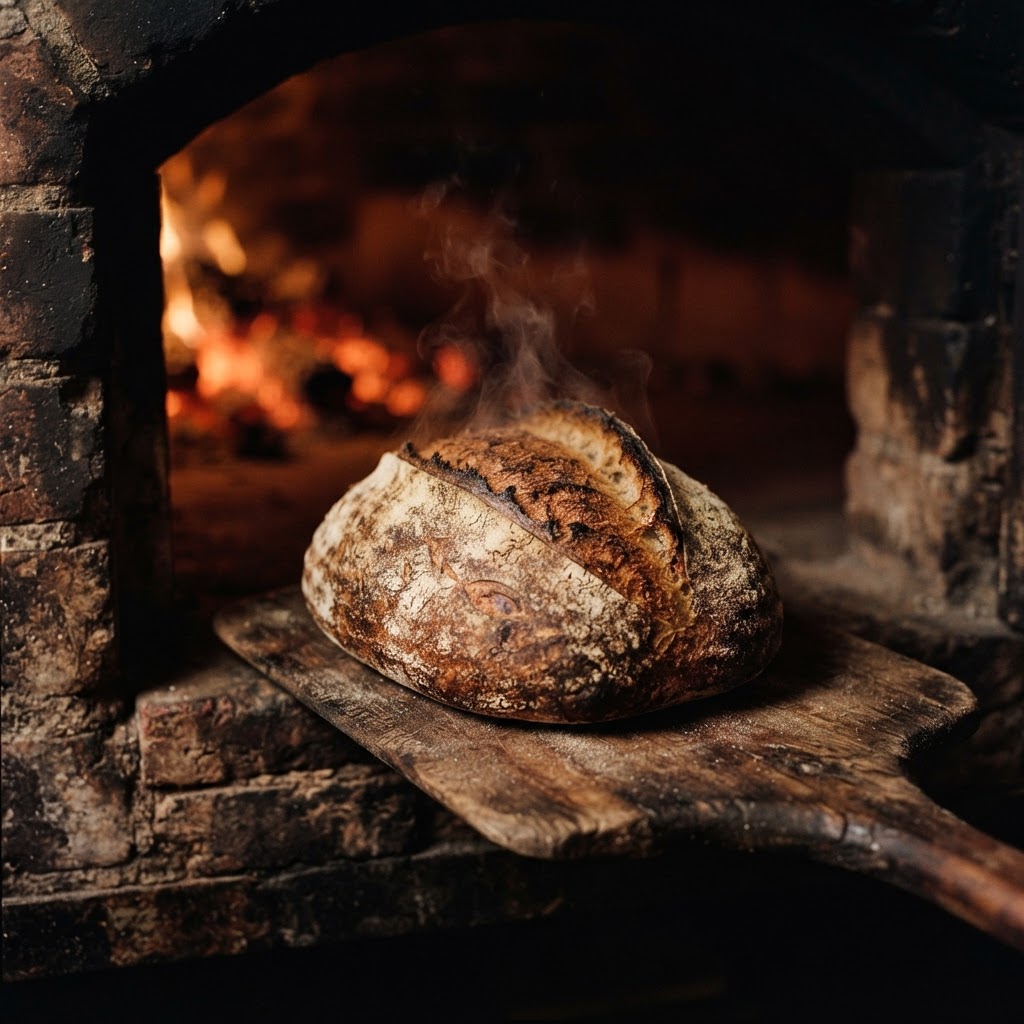
The Alchemy of Ash and Embers: Why Heritage Scotch Ovens Still Reign Supreme
In the heart of Australia's country towns, century-old Scotch ovens are crafting crusts that modern technology simply cannot replicate. Discover the science and soul behind the fire-baked loaf.
The Living Hearth
The pre-dawn air in a country bakery is thick with the sweet, toasted aroma of flour settling in the dust and the sharp, resinous perfume of ironbark burning. Listen closely and you will hear it: the rhythmic, hollow crackle of a cooling crust, a sound known to bakers as the 'song of the loaf.' This symphony is the hallmark of the Scotch oven—a monumental structure of brick and clay that has stood at the heart of Australian baking since the late 19th century.
The Physics of Radiance
Unlike modern deck ovens, which rely on forced air or heating elements, the Scotch oven is a thermal battery. Built with thick refractory bricks, these ovens are fired for hours using hardwood—often local yellow box or red gum—until the masonry reaches a piercing, saturation heat. Once the embers are raked out and the oven is 'tempered,' the baking process begins. The heat is exclusively radiant, emanating from the very bricks that compose the oven’s ceiling and floor. This consistent, deep-tissue warmth penetrates the dough faster than the convection currents of a modern electric oven, allowing for a explosive 'oven spring' that yields a voluminous, airy crumb.
The Secret of the Crust
Why does a loaf from a town like Braidwood or Hahndorf taste fundamentally different? It comes down to the environment. As the dough hits the floor of a Scotch oven, the initial burst of heat is intense, causing the sugars on the surface to caramelize almost instantly. However, as the oven temperature gently tapers off, the crust undergoes a slower, more profound Maillard reaction. Because these ovens retain a lingering, natural humidity from the cooling masonry, the exterior achieves a deep, chestnut-brown mahogany finish that is simultaneously brittle and chewy. It is a texture that modern deck ovens, with their sterile, dry heat, struggle to emulate without the artifice of steam injection systems.
A Legacy in Every Slice
Operating these ovens is a dying art. It requires the baker to understand the personality of their oven—how it holds heat on a humid morning versus a frost-bitten winter day. It is an intuitive, tactile process of feeling the heat radiating from the brick face to determine the perfect moment for the 'sour' to go in. When you buy a sourdough boule from a heritage country bakery, you aren't just buying bread; you are buying four hours of thermal management and a hundred years of architectural integrity.
The Takeaway
The next time you travel through rural Australia, bypass the convenience chains. Seek out the bakeries with the blackened, soot-stained chimneys. That signature crackle and the deep, complex depth of a fire-baked crust are proof that sometimes, the old ways are not just better—they are irreplaceable.