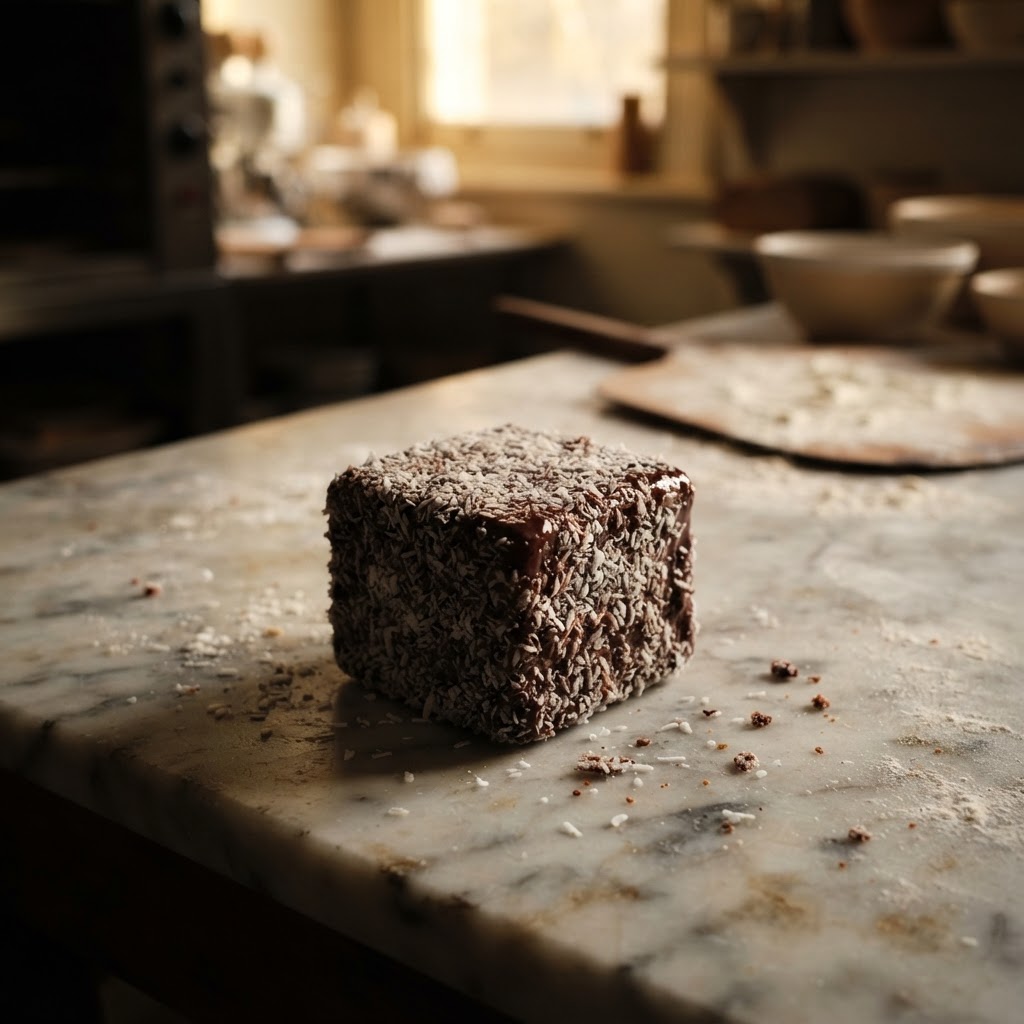
The Golden Standard: Reclaiming the Lamington from the Supermarket Shelf
Is the lamington a Queensland invention or a Victorian curiosity? Regardless of its disputed history, one thing is certain: the soul of this Australian icon is found in the local bakery, not the plastic-wrapped aisle.
A Morning Ritual of Crumb and Cocoa
The bell above the bakery door rings with a sharp, familiar chime, punctuating the stillness of dawn. Inside, the air is heavy with the intoxicating perfume of scorched sugar, browned butter, and the deep, earthy hum of dark cocoa powder. This is the sensory architecture of a true Australian bakery, where the day’s production of sponge cakes is already underway—a stark contrast to the sterile, silent aisles of the supermarket.
The Great Culinary Tug-of-War
The origins of the lamington remain one of our nation's most polite, yet persistent, culinary feuds. Was it crafted in Toowoomba to feed the unexpected guests of Lord Lamington in 1896, or did it emerge from the kitchens of Wellington, New Zealand? Perhaps it was a thrifty invention of a Brisbane cook trying to revive a stale sponge cake by masking its dryness in chocolate icing and desiccated coconut. While historians parse the ledger books of Government House, the true history of the lamington is written in the methodology of the local baker.
The Bakery Difference
The fundamental flaw of the supermarket lamington lies in its preservation. To survive weeks on a shelf, industrial sponges are pumped with emulsifiers and stabilizers, resulting in a texture that is unnervingly uniform and rubbery. Conversely, a bakery-made lamington relies on the ephemeral quality of a freshly whipped genoise or butter sponge.
When you bite into a lamington from a premium Australian bakery, you are tasting a deliberate assembly. The sponge is baked in high-sided tins to ensure a fine, airy crumb, then cooled until it is firm enough to withstand the bath of tempered chocolate ganache. The best bakers use high-fat couverture chocolate, which sets with a crisp snap, rather than the waxy, sugary coatings of mass production.
Then comes the coconut. Supermarket versions often use a dry, splintered shard of desiccated coconut that sticks to the roof of your mouth. An artisan bakery sources high-quality, medium-shred coconut, toasted just enough to release its natural oils, providing a nutty counterpoint to the bittersweet chocolate. When these elements are combined fresh each morning, the cocoa absorbs just slightly into the sponge, creating a moist, luxurious interior that melts upon contact.
The Takeaway
The lamington is not merely a cake; it is a cultural cornerstone that demands respect. Skip the multi-pack aisle and seek out the bakeries that value craft over shelf-life. A fresh, morning-rolled lamington is not just better—it is the only way to experience this piece of Australian history as it was intended.