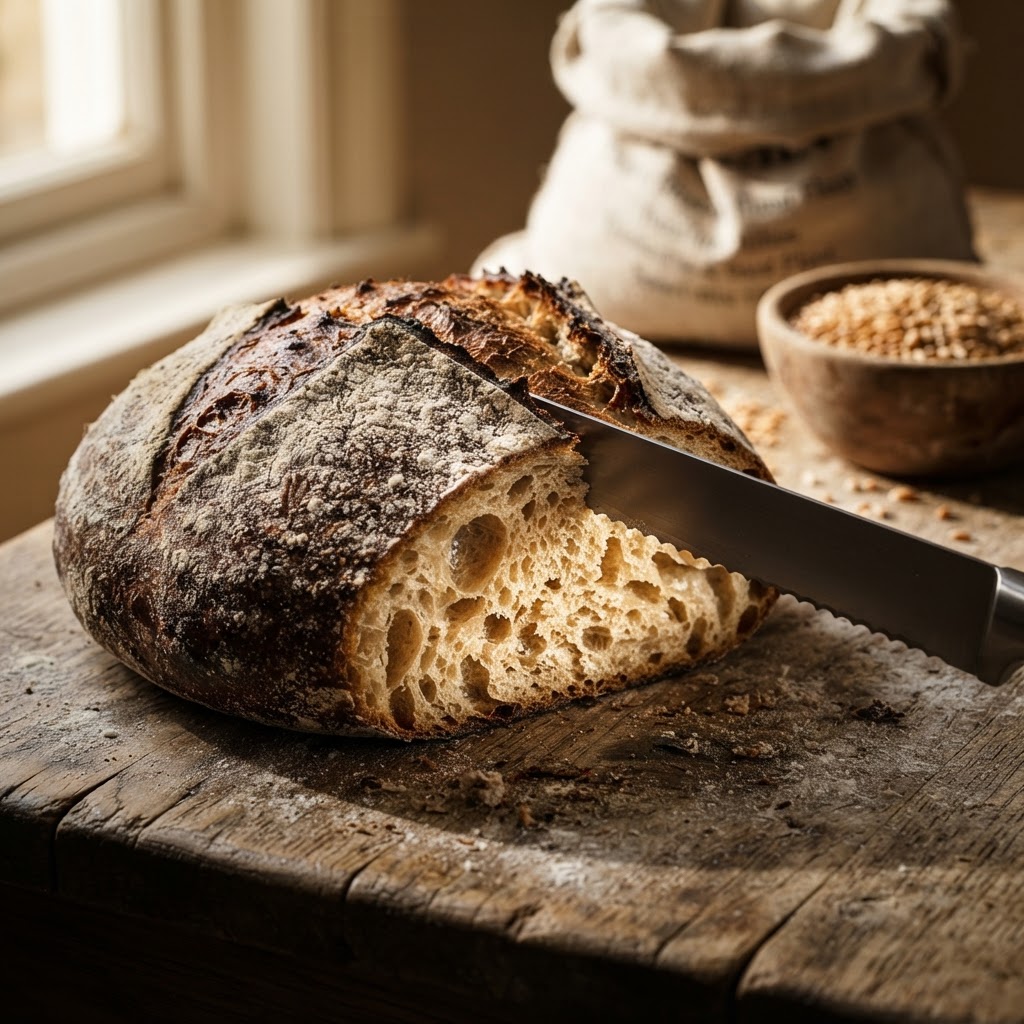
The Alchemy of Stone-Milled Flour: Why Heritage Grains are Reshaping Australian Baking
A deep dive into the resurgence of stone-milled, single-origin grains in the Australian bakery scene and how they are transforming the humble loaf into a complex, nutritious masterpiece.
The morning begins with the sharp, rhythmic snap of a crust cooling on a wire rack, followed by the deep, earthy perfume of toasted wheat that seems to cling to the very walls of the bakery. It is a scent that speaks of sun-drenched paddocks and the grounded, honest labour of the harvest. In recent years, Australian artisanal baking has undergone a quiet but profound transformation. We are moving away from the bleached, ultra-refined flours of the industrial era and returning to a reverence for the grain itself—specifically, the stone-milled, heritage-variety grains that are now reclaiming their place at the centre of our culinary identity.
The Return to the Whole Kernel
The fundamental shift in our baking culture lies in the extraction rate. Modern industrial milling strips away the germ and the bran, leaving behind a stable but nutritionally hollow starch. By contrast, stone milling retains the grain in its entirety. The heavy granite burr stones used by our new wave of craft millers—often located in regions like the New South Wales Central Tablelands or the wheat belts of Western Australia—operate at a lower temperature. This is crucial; friction heat is the enemy of volatile oils. When we preserve these oils within the flour, we are preserving the soul of the grain, resulting in doughs that possess a distinct nuttiness, a creamy crumb, and an elasticity that feels alive beneath the hands of the baker.
Decoding the 'Terroir' of Australian Wheat
Much like the wine industry has long championed the concept of terroir, Australian bakers are beginning to understand that a hard red wheat grown in the dry, iron-rich soils of the Mallee tastes fundamentally different from a soft white wheat harvested in the cooler climates of the Southern Highlands. This is where the magic of the 'single-origin' movement gains traction. Bakers are now acting as curators, selecting specific harvests to highlight in their loaves. When you bite into a loaf crafted from, say, high-protein Spitfire wheat, you are experiencing the direct output of that particular season’s rainfall and soil chemistry. The fermentation profile also changes; heritage grains are often higher in minerals and enzymes, which feed the wild yeast cultures in a sourdough starter more vigorously than conventional flour. This results in a more rapid, more complex fermentation process that produces deep, acetic, and lactic notes that simply cannot be replicated by commercial yeast additives.
Technical Nuance and Handling the Dough
Working with high-extraction, stone-milled flour requires a recalibration of traditional technique. These flours are more thirsty; they require higher hydration levels to properly hydrate the bran particles. A baker who ignores this will end up with a tight, dense loaf. However, when managed correctly, the bran acts as a scaffold, providing structure that supports a more open, airy crumb structure than one might expect from a whole-grain product. Autolyse is non-negotiable here. By mixing only the flour and water and letting it rest for at least sixty minutes before introducing salt or leaven, we allow the enzymes to break down the complex starches into simpler sugars. This creates a more extensible dough, reducing the need for aggressive kneading and protecting the delicate structure formed by the heritage grain proteins.
The Social Fabric of the Mill and the Oven
This isn't just about the science of bread; it is about the re-establishment of a supply chain that benefits both the farmer and the consumer. By buying directly from millers who support regenerative agricultural practices, Australian bakeries are essentially funding the health of our soil. When you visit a local bakery this weekend, look for the signage that highlights the provenance of their flour. Ask if they are using stone-milled varieties. You will likely find a loaf that is darker, denser, and far more fragrant than the standard fare. The movement toward heritage grains is a movement toward mindfulness—a recognition that the best bread is the result of a symbiotic relationship between the land, the miller, and the baker. Takeaway: Seek out bakeries that prioritise stone-milled, single-origin grains; the nuanced flavour and improved nutritional profile make it a superior choice for your daily table.